Expert Perspective:
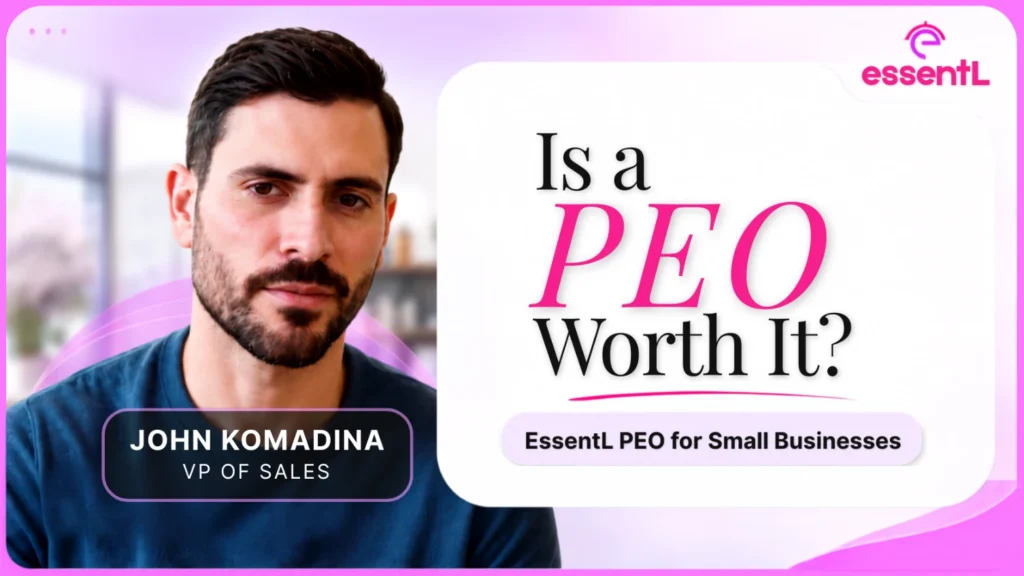
John Komadina, VP of Sales at EssentL, helps small business owners understand what a PEO relationship actually means before they make a decision. In those conversations, one of the most common points of confusion is co-employment: what it is, what it is not, and whether the business owner is giving up control.
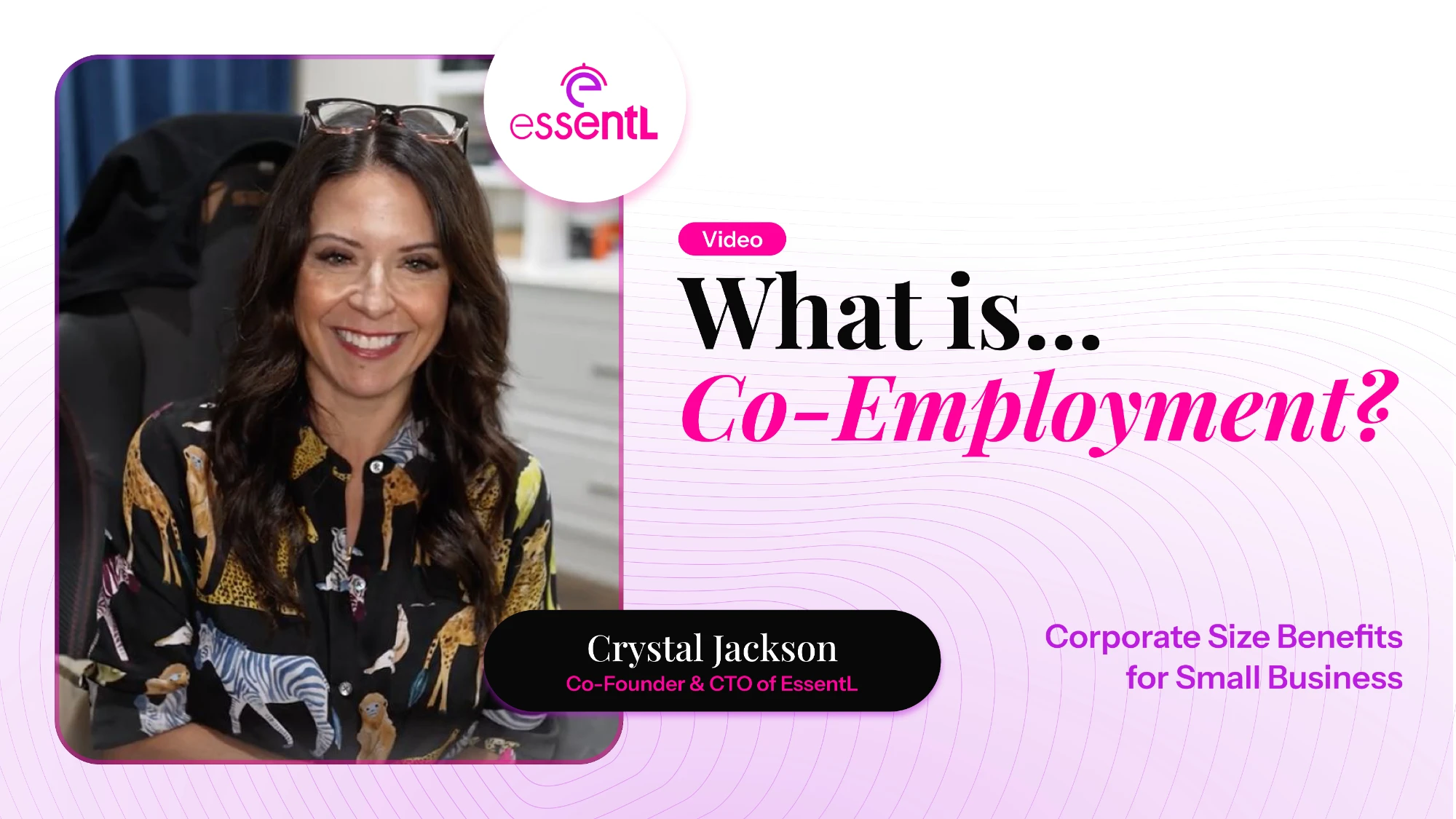
Crystal Jackson, Co-Founder and CTO of EssentL, brings the founder perspective to that conversation. Before building EssentL, she had to learn the PEO model herself and understands why terms like “co-employment” can sound more intimidating than they actually are. Together, John and Crystal help explain co-employment in plain English so small business owners can make informed decisions with less confusion.
Co-employment sounds like one of those terms that belongs in a legal document, not in a normal conversation with a small business owner.
And honestly, that is part of the problem.
When a founder hears “co-employment,” the first reaction is often hesitation. What does that mean? Does someone else become the employer of my team? Am I giving up control? Does this mean another company can tell me who to hire, who to fire, or how to run my business?
Those are fair questions.
Most small business owners have never heard the term before they start researching PEOs. And because the word sounds technical, it can make the whole concept feel more intimidating than it needs to be.
The good news is that co-employment is not as scary as it sounds.
In a PEO relationship, co-employment is the structure that allows the PEO to help support certain employment-related responsibilities, such as payroll administration, payroll tax administration, benefits administration, workers’ compensation support, unemployment support, HR compliance support, and employee documentation.
It does not mean the PEO takes over your business.
You still run the company. You still manage your people. You still make the decisions. The PEO helps support the employment infrastructure behind the business.
The Short Answer: What Is Co-Employment in a PEO Relationship?
Co-employment is the relationship between a business and a PEO where both parties share certain employment-related responsibilities.
The business owner continues to run the company, manage employees, make hiring and firing decisions, lead the team, serve clients, and set the direction of the business.
The PEO helps support employment administration. That may include payroll, payroll tax administration, benefits administration, workers’ compensation, unemployment support, HR compliance support, employee onboarding, and employee documentation.
The simplest way to think about it is this:
Co-employment does not mean the PEO takes over your business. It means the PEO helps support the employment responsibilities that come with having a team.
That difference matters.
For many small business owners, the fear is not really about payroll or benefits. The fear is about control. They want help, but they do not want to hand over the keys to the company they built.
A good PEO relationship should not feel like handing over the keys.
It should feel like getting support for the parts of employment that were never supposed to be the founder’s full-time job.
Why Co-Employment Makes Business Owners Nervous
The word “co-employment” raises immediate questions.
Who is the real employer?
Who controls the employees?
Who makes hiring and firing decisions?
Who is responsible if something goes wrong?
Who owns the relationship with the team?
That confusion is normal.
A lot of founders are used to making decisions quickly and independently. They have built their businesses by being resourceful. So when they hear that another organization may share certain employment-related responsibilities, they wonder whether that means they are giving something up.
In most cases, the concern comes from the language.
“Co-employment” sounds like a transfer of power. But in a PEO relationship, the business owner still runs the business.
The PEO is not stepping in to decide what kind of work your company does. It is not choosing your clients. It is not managing your day-to-day operations. It is not deciding your company culture. It is not telling you what your business should become.
The PEO is helping with the employment side of the business.
That distinction is the difference between fear and clarity.
A Plain-English Way to Think About Co-Employment
Crystal often thinks about co-employment like a structured handshake.
The business and the PEO are agreeing on who handles which employment-related responsibilities. The business keeps running the business. The PEO helps support the administration that sits underneath employment.
That may include payroll taxes, benefits, HR support, workers’ compensation, unemployment, and employee documentation.
It does not mean, “We own your team now.”
It means, “We help you manage the employment responsibilities that come with having a team.”
For a small business owner, that can be incredibly valuable.
Maybe you are hiring your first employee. Maybe you have a few employees in different states. Maybe you want to offer benefits for the first time. Maybe you have been running payroll, but every question around payroll has started to feel more complicated.
Co-employment gives the PEO a defined role in helping support those responsibilities.
The founder still leads.
The PEO supports.
What the Business Owner Still Controls
One of the most important things to understand about co-employment is what it does not change.
The business owner still controls the business.
That includes:
Business strategy
Client relationships
Day-to-day operations
Hiring decisions
Firing decisions
Compensation decisions
Team management
Performance expectations
Company culture
Work product and service delivery
Growth decisions
The founder is still the founder.
If you started an agency, you still run the agency. If you started a consulting firm, you still run the consulting firm. If you are a creator with a small team, you still lead the creative direction. If you run a local service business, you still decide how the business operates.
A PEO does not replace leadership.
Instead, the PEO helps with the employment administration that founders often end up managing by default.
That matters because many small business owners are not trying to avoid responsibility. They are trying to stop carrying every single administrative responsibility alone.
What the PEO Helps Handle
A PEO can help support many of the employment-related tasks that sit behind a business.
That may include payroll administration, payroll tax administration, employee onboarding, benefits administration, workers’ compensation support, unemployment support, HR compliance guidance, employee documentation, required notices, employee handbook support, and support when employee issues arise.
These are the tasks that often pile up quietly.
At first, it may feel manageable. One payroll run. One new hire. One form. One employee question.
Then the business grows.
Now there are benefits questions. Payroll deductions. State-specific employment rules. Workers’ compensation questions. Documentation requirements. Unemployment notices. Employee handbook updates. HR issues that need to be handled carefully.
A PEO helps small businesses create more structure around those responsibilities.
That is why co-employment matters. It is not just a legal phrase. It is the structure that allows the PEO to support more than payroll alone.
Co-Employment vs. Employer of Record
Co-employment is sometimes confused with an employer of record model, but they are not the same thing.
In a PEO relationship, the business and the PEO share certain employment-related responsibilities. The business owner continues to manage the employees and run the business day to day.
An employer of record, often called an EOR, is a different structure. In many EOR arrangements, a third party may legally employ workers on behalf of another company. This model is often used when a company wants to hire in a location where it does not have its own employment setup or legal entity.
The details can vary, so it is important to review the agreement carefully.
But at a high level, a PEO relationship is not the same as fully outsourcing the employer role. In a PEO relationship, the business owner remains actively in control of the business and team, while the PEO supports certain employment-related responsibilities.
That difference is important for small business owners who worry that co-employment means someone else is taking over.
It does not.
Why Shared Responsibility Can Be a Good Thing
The phrase “shared responsibility” can sound intimidating at first.
But in a PEO relationship, that shared responsibility is often part of the value.
A payroll company is usually a vendor. It may process what you put into the system. But a PEO has a deeper relationship with the employment side of the business.
Because the PEO has a role in certain employment-related responsibilities, it has a reason to help make sure the process is handled correctly. That can create more structure around payroll, payroll taxes, benefits, workers’ compensation, unemployment, employee documentation, and HR compliance.
For a small business owner, that can be more reassuring than juggling disconnected vendors.
Instead of one provider for payroll, another for benefits, another for workers’ comp, another for HR software, and another advisor for every question, a PEO can help bring more of the employment infrastructure together.
That does not mean risk disappears.
But it does mean the founder is not trying to manage every piece alone.
The Alphabet Soup Problem
One of the most overwhelming parts of becoming an employer is the number of acronyms that appear almost immediately.
FLSA. ACA. FMLA. DOL. EEOC. I-9. COBRA. ERISA.
And that is only the beginning.
Most founders did not start a business because they wanted to memorize employment acronyms. They started a business because they wanted to build something.
But once they start hiring, all of these employment rules, agencies, forms, and requirements start showing up.
That is where a PEO can help simplify the experience.
A small business owner does not need to become an expert in every acronym on day one. They need to understand that employment comes with responsibilities, and they need the right support to help manage them.
In a world full of HR acronyms, the one acronym small business owners should understand first is PEO.
Because the right PEO helps make the rest of the alphabet soup easier to manage.
What About Legal Risk?
Co-employment does not eliminate every employment risk.
That is important to say clearly.
A PEO can help support the employment side of the business, but it does not make employment law disappear. The business owner still needs to manage employees appropriately, make thoughtful decisions, follow policies, communicate clearly, and take workplace issues seriously.
The client service agreement should outline which responsibilities belong to the business and which responsibilities are supported by the PEO. Business owners should review that agreement carefully and ask questions before signing.
That is not something to be afraid of.
It is something to understand.
A good PEO should be willing to explain the relationship clearly. What is included? What is not included? Who handles payroll tax administration? What HR support is available? How are benefits handled? What happens with workers’ compensation? What happens if an employee leaves? What happens if the business leaves the PEO?
Co-employment is safest when it is clear.
How to Vet a PEO
If you are evaluating a PEO, do not stop at the headline services.
Ask how the relationship is structured. Ask what is included. Ask what is not included. Ask what support looks like when an actual HR issue comes up. Ask whether you will be able to talk to a real person. Ask how payroll tax administration is handled. Ask how benefits, workers’ compensation, unemployment, employee documentation, and compliance support work.
You may also see terms like CPEO certification or ESAC accreditation.
CPEO stands for Certified Professional Employer Organization. It is a voluntary IRS certification for PEOs that meet certain requirements related to background, experience, business location, financial reporting, tax compliance, and bonding.
ESAC accreditation is a separate PEO industry accreditation and financial assurance program. It can help verify a PEO’s financial, ethical, and operational reliability.
These credentials can be useful things to ask about when comparing PEOs. They should not be the only factors you consider, but they can be part of a broader evaluation.
You should also consider the support model, agreement terms, benefits structure, pricing, service quality, responsiveness, and whether the PEO is actually built to support a business of your size.
For small businesses, fit matters.
A PEO may look good on paper, but if the support model is built around larger companies, a very small team may still feel overlooked.
What Happens If You Leave a PEO?
This is another good question to ask before signing.
Leaving a PEO does not mean your business stops existing. Your company is still your company.
But the employment administration that was supported through the PEO may need to transition to other providers or internal systems.
That could include payroll, benefits, workers’ compensation, unemployment, employee records, HR support, required notices, and compliance processes. Benefits may change depending on the structure. Payroll setup may need to move. Employee records may need to be organized for transition. The business may need to make sure the right accounts, policies, and systems are in place outside the PEO.
This is why it is important to understand the relationship from the beginning.
A good PEO conversation should not only explain how onboarding works. It should also help you understand what the relationship looks like long term and what would happen if your business eventually made a different decision.
That kind of transparency builds trust.
Is Co-Employment Safe for Small Businesses?
Co-employment can be a safe and useful structure when the business owner understands the agreement, works with a reputable PEO, and continues managing the business responsibly.
It is not a loophole.
It is not a way to avoid employer responsibilities.
It is not a way to stop caring about HR, employees, policies, or compliance.
It is a way to share and support certain employment-related responsibilities with a professional organization that is built to handle them.
For many small businesses, that can be a major advantage.
Instead of trying to figure out payroll, benefits, HR, workers’ compensation, unemployment, employee documentation, and compliance guidance alone, the founder has support.
The best PEO relationships make the business owner feel clearer, not more confused.
Why EssentL Explains This in Plain English
Small business owners should not need a legal dictionary to understand their options.
That is especially true for very small teams.
If you have one employee, three employees, five employees, or ten employees, you may not have an internal HR department. You may not have a benefits team. You may not have a compliance person. You may not even know what questions you are supposed to ask yet.
That is why EssentL focuses on explaining the PEO model in plain English.
Before someone decides whether a PEO is right for their business, they should understand what the relationship means. They should understand what they still control. They should understand what the PEO helps support. They should understand what questions to ask.
Co-employment should not feel like a mystery.
It should feel like a structure you understand.
Essential Criteria for Choosing the Right PEO Partner
Co-employment sounds intimidating, but the concept is straightforward.
The business owner still runs the business.
The PEO helps support the employment side of the business.
That may include payroll, payroll taxes, benefits administration, HR support, workers’ compensation, unemployment support, compliance guidance, employee onboarding, and employee documentation.
The goal is not to take control away from founders.
The goal is to give small businesses access to stronger employment infrastructure, so they are not trying to manage every HR, payroll, benefits, and compliance responsibility alone.
If you are exploring a PEO and co-employment still feels confusing, EssentL can help you understand what the relationship would look like for your business before you make a decision.
Frequently Asked Questions
What is co-employment in a PEO?
Co-employment is a relationship where a business and a PEO share certain employment-related responsibilities. The business owner continues to run the company, while the PEO helps support payroll, benefits, HR administration, compliance guidance, and related employment functions.
Does co-employment mean I lose control of my business?
No. The business owner still manages the company, leads the team, makes hiring and firing decisions, sets compensation, and runs day-to-day operations. The PEO supports employment administration behind the scenes.
Is co-employment safe?
Co-employment can be a safe and useful structure when the business understands the agreement and works with a reputable PEO. Business owners should review responsibilities, services, risks, and agreement terms before signing.
What does the PEO handle in a co-employment relationship?
A PEO may help handle payroll administration, payroll tax administration, benefits administration, workers’ compensation support, unemployment support, HR compliance guidance, employee onboarding, and employee documentation.
Who is the employer in a co-employment relationship?
In a PEO relationship, both the client company and the PEO have certain employment-related responsibilities. The exact responsibilities should be outlined in the client service agreement.
Is a PEO the same as an employer of record?
No. A PEO and an employer of record are different structures. A PEO generally works with a business through a co-employment relationship, while an employer of record may legally employ workers on behalf of another company depending on the arrangement.
What happens if I leave a PEO?
If a business leaves a PEO, payroll, benefits, workers’ compensation, unemployment, HR support, and employee administration may need to transition to new providers or internal systems. The details depend on the agreement and should be discussed before signing.
What is CPEO certification?
CPEO stands for Certified Professional Employer Organization. It is a voluntary IRS certification for PEOs that meet certain requirements related to background, experience, business location, financial reporting, tax compliance, and bonding.
What is ESAC accreditation?
ESAC accreditation is a PEO industry accreditation and financial assurance program. It can help verify a PEO’s financial, ethical, and operational reliability. It can be one factor to consider when evaluating a PEO, along with services, support model, agreement terms, pricing, and fit for your business.
Disclaimer
This article is for educational purposes only and is not legal, tax, insurance, payroll, or HR advice. Co-employment relationships, PEO agreements, employment responsibilities, and compliance obligations vary by provider, state, business structure, employee status, and individual circumstances. Always consult qualified legal, tax, HR, payroll, benefits, or insurance professionals before making decisions for your specific business.